


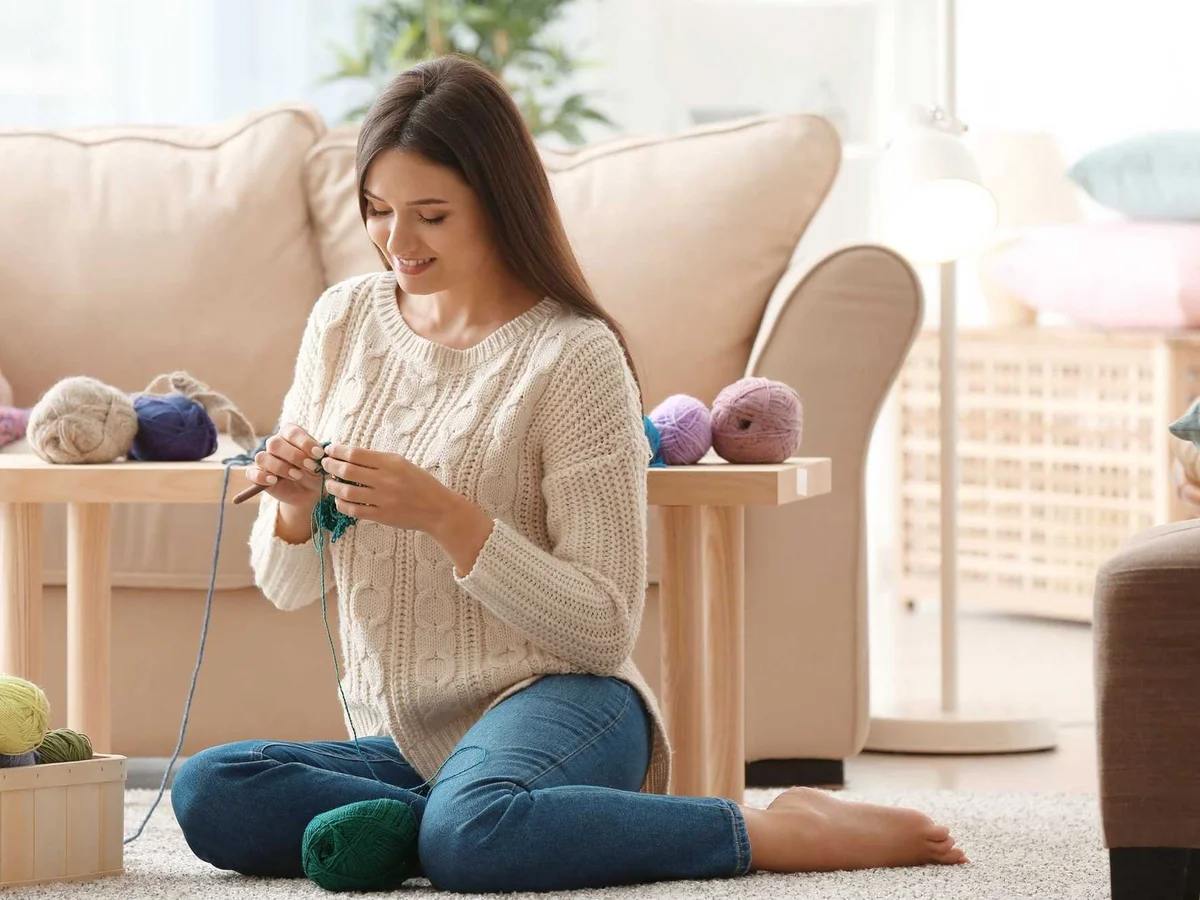
The hardest part of learning either craft is picking the wrong first project. A beginner who starts with a fitted sweater usually stops; one who starts with a dishcloth usually carries on.
What makes a project beginner-friendly
Four things, and they matter more than any label a pattern carries.
It is flat. A rectangle or a square lets you concentrate on making even stitches without also tracking shaping. Scarves, dishcloths, blankets and cushion covers all qualify.
The fit does not matter. A dishcloth that comes out an inch narrow is still a dishcloth. A hat an inch narrow fits nobody. Save anything that has to fit a body until your tension is consistent.
It finishes quickly. A first project that takes three months will not be finished. Something you can complete in an evening or two gives you the result that makes you want to do the next one.
It uses one stitch. Learn one stitch properly before combining several.
Good first projects
A dishcloth in cotton is the standard recommendation and it deserves it – small, fast, useful, and the yarn is cheap enough that mistakes cost nothing.


A simple scarf teaches you consistency over a longer piece. A granny square teaches working in the round, and once you have one you can make a blanket from many.
Slippers are a good second project: small, quick, and they introduce shaping without demanding precision.
The thing everyone skips
Gauge. Work a small swatch, measure how many stitches you get to the inch, and compare it to the pattern.
On a dishcloth it does not matter. But building the habit now means that when you do make something that has to fit, you already know how.
Tension will be uneven at first
Everyone’s first rows are tighter or looser than the rest. It evens out with practice, faster than you expect. Do not unpick a whole project over it – finish the thing, and the next one will be better.
