


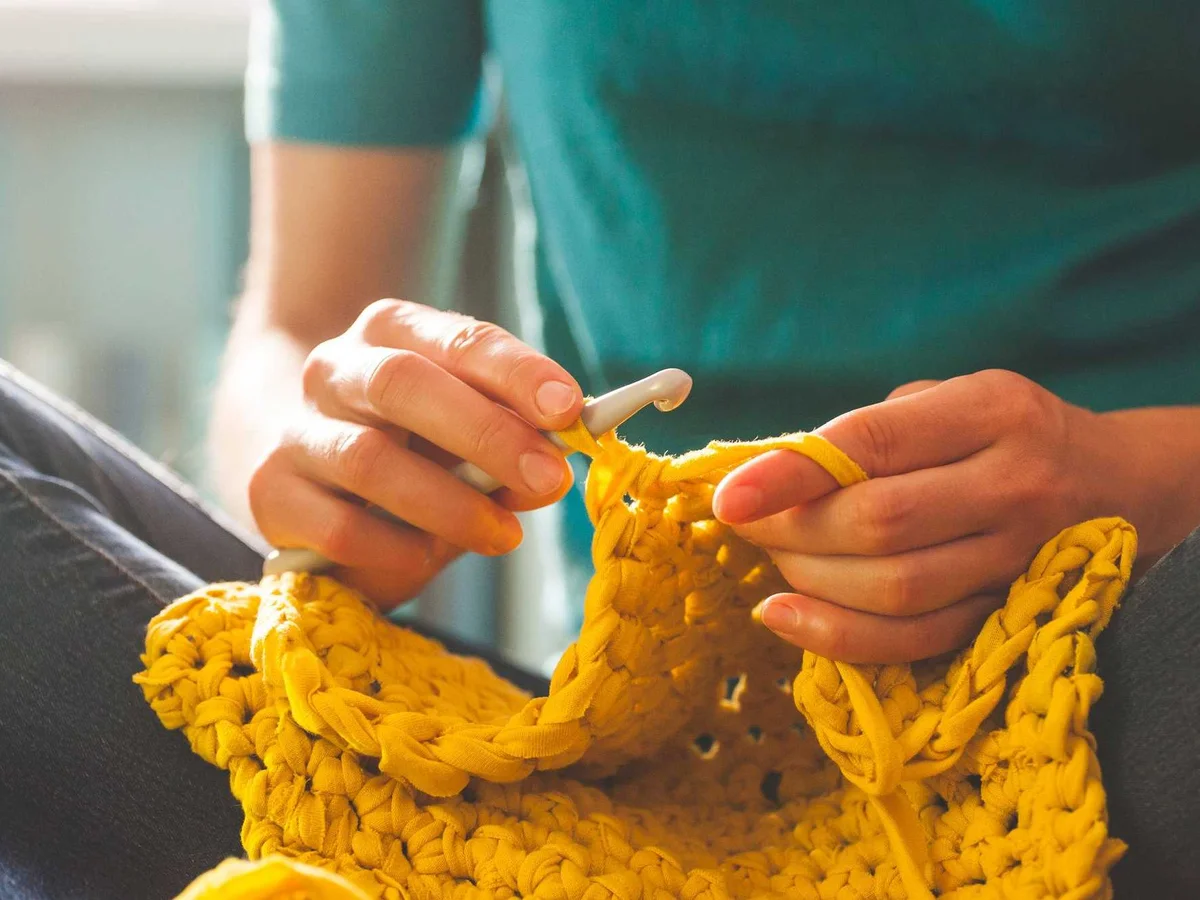
Crocheted bracelets are fun to wear with almost anything, and they come into their own in summer, when you can work them in bright colours to match whatever you are wearing. They use tiny amounts of yarn, so they are an excellent way to use up odds and ends and accessorise a wardrobe for almost nothing.
And being crocheted does not mean they cannot be elegant. A bracelet made in the right material, in the right colour, is as suitable for a party or a wedding as anything bought in a shop. The material is what decides which end of that range you land at.
Cotton
The default choice, and the right one for casual bracelets. It holds a crisp stitch, comes in every bright colour, washes well and does not stretch out of shape on the wrist.
Mercerised cotton is worth seeking out. The treatment gives it a subtle sheen that lifts a simple stitch pattern considerably, and it resists the fuzzing that plain cotton develops with wear.
Crochet thread
For anything formal, use thread rather than yarn. Size 10 thread with a fine steel hook produces a delicate, close-worked band that reads as jewellery rather than as a craft project.
It is slower and it needs good light. It is also the single biggest difference between a bracelet that looks homemade and one that does not.


Metallic and novelty threads
A fine metallic thread held alongside cotton adds a glint without making the piece scratchy. Used alone, metallic thread has sharp edges and no stretch, and it is uncomfortable against the wrist.
What to avoid
Wool and other animal fibres. They are soft in the hand but they stretch with wear and body heat, and a bracelet that has stretched cannot be shrunk back.
Anything very fuzzy, which will blur whatever stitch pattern you have chosen.
Beads and findings
Beads thread onto the yarn before you start, so plan them in advance – you cannot add them later without cutting.
Match the bead hole to the yarn thickness. A bead that only just fits will fray the yarn as you slide it along, and one that is too loose will drift.
For the fastening, a button and a chain loop is simplest and most reliable. Sew the button on with doubled thread; it is the only part under real strain.
Sizing
Measure the wrist and make the bracelet very slightly shorter, because crochet relaxes with wear. Cotton relaxes less than wool but it does still relax.
If you are making it as a gift and cannot measure, use an adjustable closure – a longer chain with several buttonholes lets it fit anyone.

