


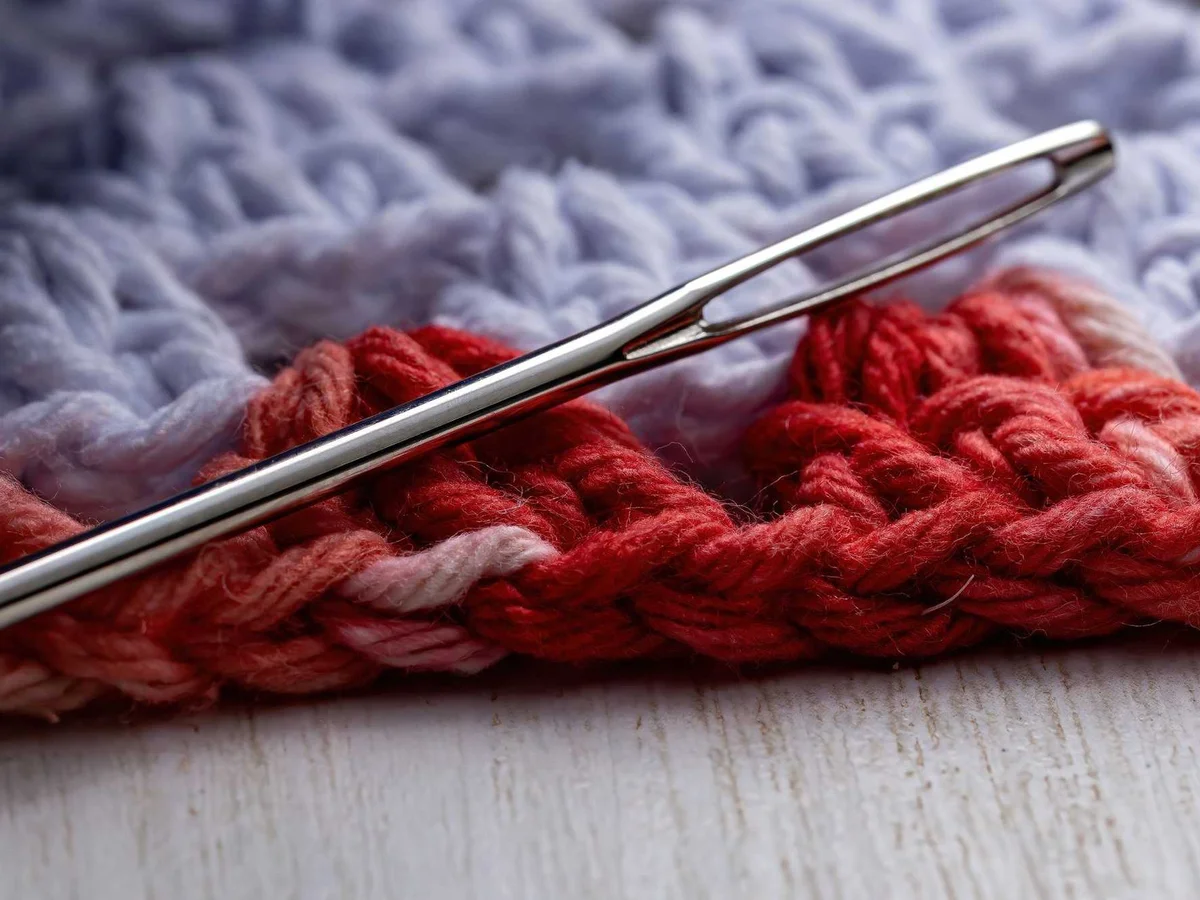
A beanie worked with a honeycomb cable texture across it. The finished hat measures 9 inches wide by 9 inches tall. Worsted weight yarn with a 6 mm hook.
Check your gauge, seriously
The designer notes that when she made a version in Red Heart Super Saver she got almost the same gauge but the hat came out differently. That is worth paying attention to, and it is not a contradiction.
Cable and post-stitch textures pull the fabric in far more than flat stitches do, and different yarns resist that pull differently. A springy wool holds the cables open; a stiffer acrylic lets them compress. Two yarns can measure the same over a flat swatch and produce hats of noticeably different circumference once cabled.
So swatch in the actual stitch pattern, not in plain double crochet, and measure the cabled swatch. It is the only measurement that predicts the finished hat.
Crochet cables
The honeycomb effect comes from post stitches – worked around the stem of the stitch below rather than into its top. Front post stitches pull the yarn to the front and create the raised bar; alternating them produces the interlocking honeycomb.
It is easier than knitted cabling because there is no cable needle and no stitches held in suspense. If you can work a double crochet you can work a front post double crochet within a few minutes.
Fit
A hat should measure an inch or two less than the head it is for, so it grips. Crocheted fabric relaxes with wear, and a hat that fits exactly when new will be loose by the end of the season.
The cabled texture adds thickness, so a hat that fits snugly will still feel substantial.
Yarn
Wool or a wool blend shows cables best and springs back well. Acrylic is more practical for a hat that lives in a coat pocket. Both work; just swatch in the stitch pattern whichever you choose.


