


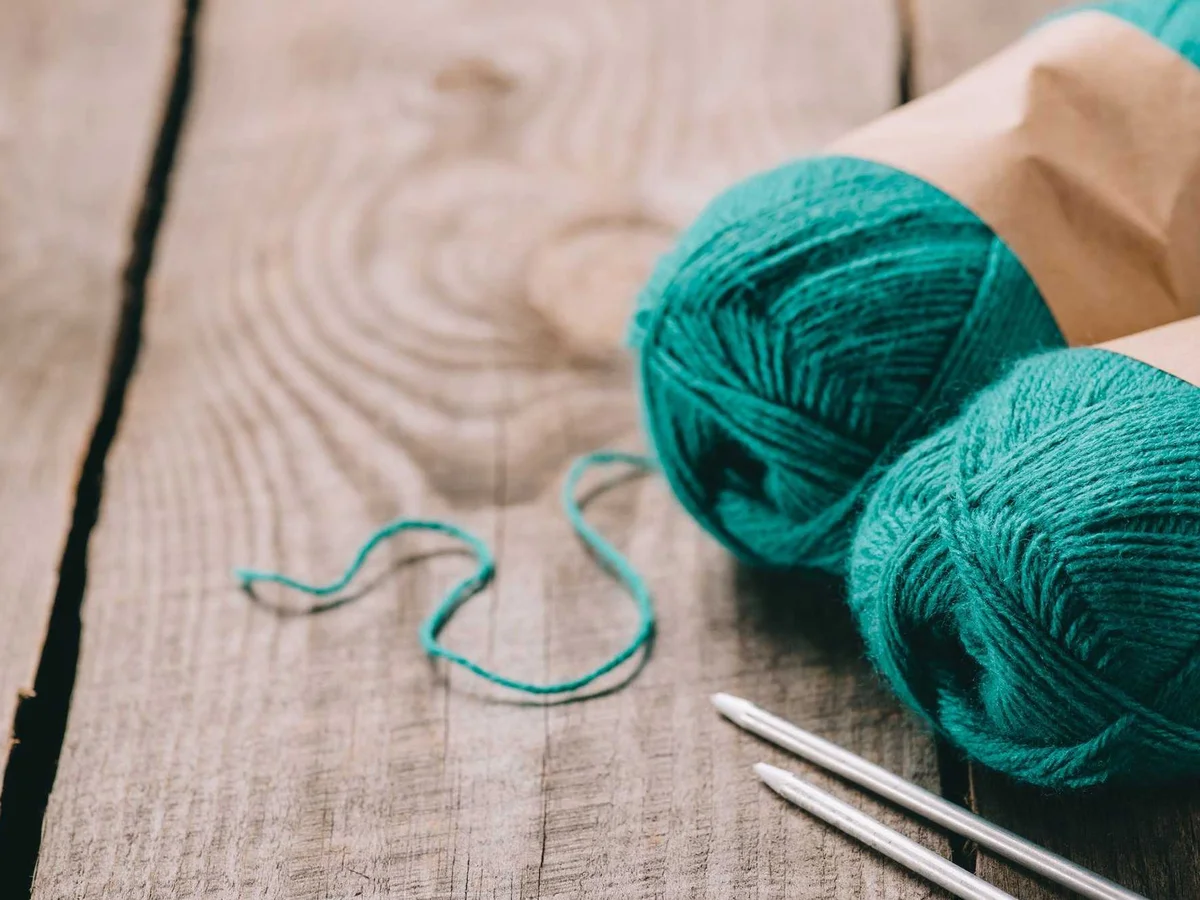
There is no better time of year to sit down and get creative. Christmas is the perfect occasion to try new craft activities – so why not make like one of Santa’s elves and set your fingers to work?
If you have never knitted or sewn before, it is never too late to learn. Doctors frequently note that needlework and similar crafts are good for wellbeing, so there is more to gain than a stocking.
Why a stocking is a good first project
Nothing has to fit. A stocking is decorative. There are no measurements to get right and nobody has to be able to wear it.
Rough edges read as charm. A slightly irregular handmade stocking looks characterful in a way that a slightly irregular sweater does not.
It has a deadline that is actually helpful. Christmas is a real date, and a small project with a fixed finish tends to get done.
It comes out every year. Very few first projects have that kind of afterlife. A stocking made now will be hung for decades.
Three ways to make one
Sewn is fastest. Two shaped pieces of fabric, right sides together, stitched round and turned out. A lining and a cuff finish it. This can genuinely be done in an afternoon.


Knitted takes longer and produces something with more substance. The heel is the only real challenge, and a stocking is the most forgiving place in the world to learn to turn one – nobody is going to wear it.
Crocheted works up faster than knitting and gives a firm fabric that holds its shape well when loaded.
Whichever you choose
Make it big enough. The commonest regret. A stocking that holds only an orange is disappointing. Fifteen to twenty inches from cuff to heel is a proper size.
Make it strong enough. A full stocking is heavier than the empty one suggests. Work at a firm gauge, and anchor the hanging loop properly into the fabric rather than tacking it on.
Use strong colours. It will be seen from across a room. Subtle tonal work is wasted.
Personalising it
A name across the cuff is what turns a stocking into that person’s stocking.
Embroider it rather than working it in, if you are not confident with colourwork – duplicate stitch or backstitch over the finished fabric is easier to get right and can be unpicked if the spacing goes wrong.
Storage
Store it flat rather than folded. Knitted and crocheted fabric holds a crease through eleven months in a box, and a fold line across the front is stubborn to remove.

