


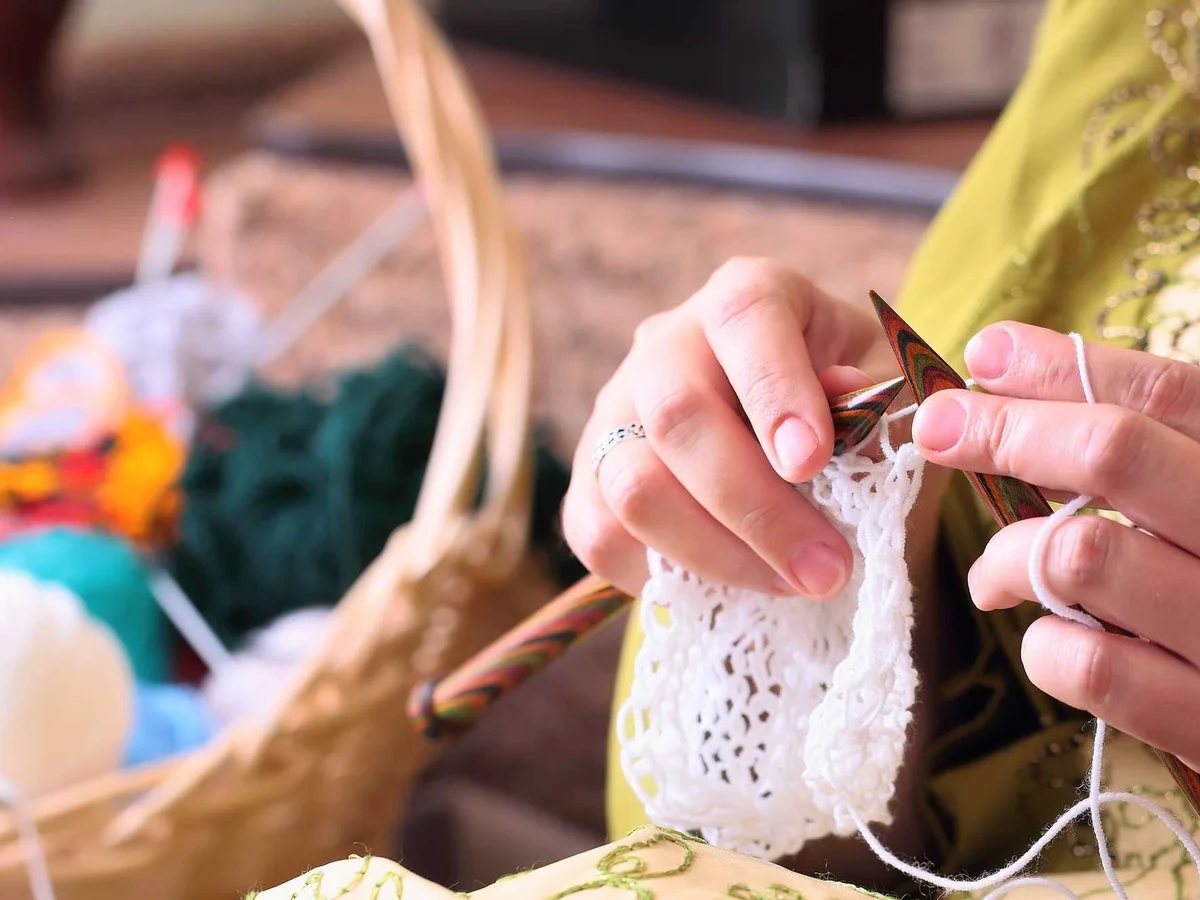
The history of hand quilting was written by generations of women who put their time, patience and skill into making something lasting out of simple fabric and thread. Every stitch joined one piece of cloth to another, and one memory to all the others. That is the real meaning of hand quilting: the more work it holds, the more it carries.
What hand quilting gives you
Machine quilting is faster, more even and entirely legitimate. Hand quilting persists because it does something different.
A softer quilt. Hand stitches have more give than machine stitching, so the quilt drapes more and feels different to sleep under.
Visible texture. Slight irregularity in hand stitching catches light in a way perfectly uniform machine work does not. The surface has depth to it.
Portability. A hoop and a needle go anywhere. A quilting machine does not.
Time with the work. This is the honest reason most hand quilters give. Weeks spent stitching a quilt is time spent thinking, and the finished object holds that.
What you need
Very little.


Quilting needles – short ones, called betweens. Short is what makes the small even stitches possible, and beginners often reject them for feeling too small before discovering that is the point.
A thimble. Not optional. You are pushing a needle through three layers many thousands of times.
A hoop or frame to hold the layers under even tension.
Quilting thread, which is stronger than ordinary sewing thread.
The stitch
A simple running stitch through all three layers – top, wadding and backing.
The skill is in consistency rather than in the stitch itself. Even length and even spacing are what make hand quilting look accomplished, far more than small stitches do.
Beginners chase tiny stitches and get uneven ones. Aim for consistent first; they get smaller on their own with practice.
The rocking motion
Experienced hand quilters load several stitches onto the needle at once with a rocking movement, rather than making one stitch at a time.
It takes a while to learn and it transforms the speed. Until it clicks, one stitch at a time is perfectly fine.
Starting out
Begin with something small – a cushion cover or a wall hanging rather than a bed quilt. It lets you build the rhythm without committing a year.
Mark your quilting lines before you start, with a fabric marker that washes out.
And accept that the first few inches will look worse than the rest. Everyone’s do. Start somewhere that will not be the focal point.
