


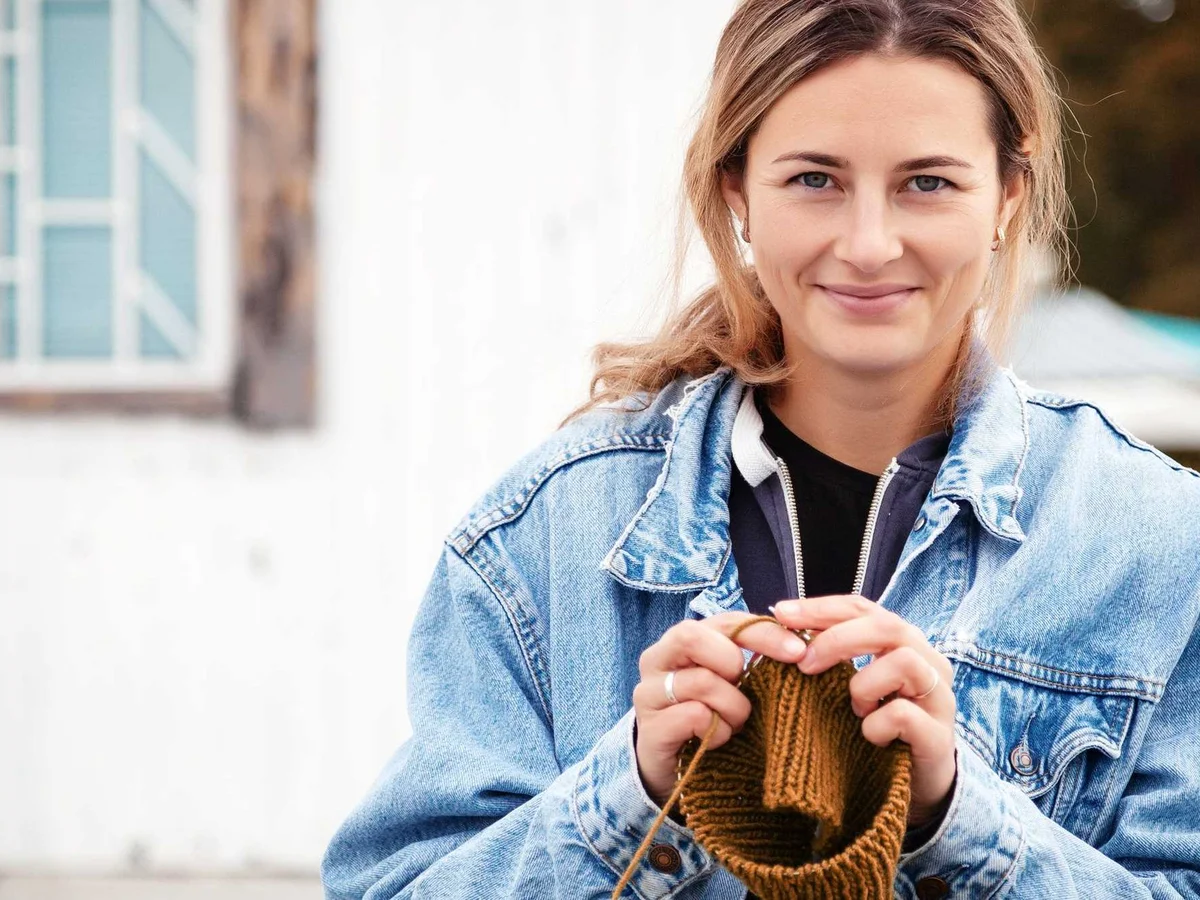
A hooded cowl designed to be worn two ways: pulled up as a hood, or dropped down to sit as a cowl around the neck.
Why two-way designs work
A hood alone is only useful in bad weather. A cowl alone offers no head covering. Combining them gives you a garment that adapts as the day does – up when the wind picks up, down when you go inside.
It also means it gets worn far more often than either would separately, which is the real test of a handmade accessory.
Getting the transition right
The design lives or dies on how it looks in both positions. A hood that bunches awkwardly around the shoulders when down, or a cowl that will not sit properly when raised, defeats the point.
Try it on as you work rather than waiting until it is finished. The length of the cowl section relative to the hood is what determines whether the drape works, and it is much easier to adjust while you are still knitting than afterwards.
Yarn
Soft, and softer than you think you need. This sits against the neck and the face, which is the most sensitive skin any garment touches. A yarn that feels fine in the hand can be intolerable against a cheek.


Test it against the inside of your wrist or your neck before buying. Merino, alpaca blends and good acrylics all work; scratchy wool does not, however warm it is.
Weight and drape
Something with drape. A stiff fabric will not fold down neatly into a cowl – it will stand up around the shoulders in a shape nobody wants.
A slightly looser gauge than the yarn’s ball band suggests will improve the drape if you are between choices.
Practical notes
Make it generous enough to go over a head comfortably, including hair. This is the measurement people most often get wrong, and a hood that is a struggle to pull on will not be pulled on.
Machine washable is worth having in something worn against the face.

