


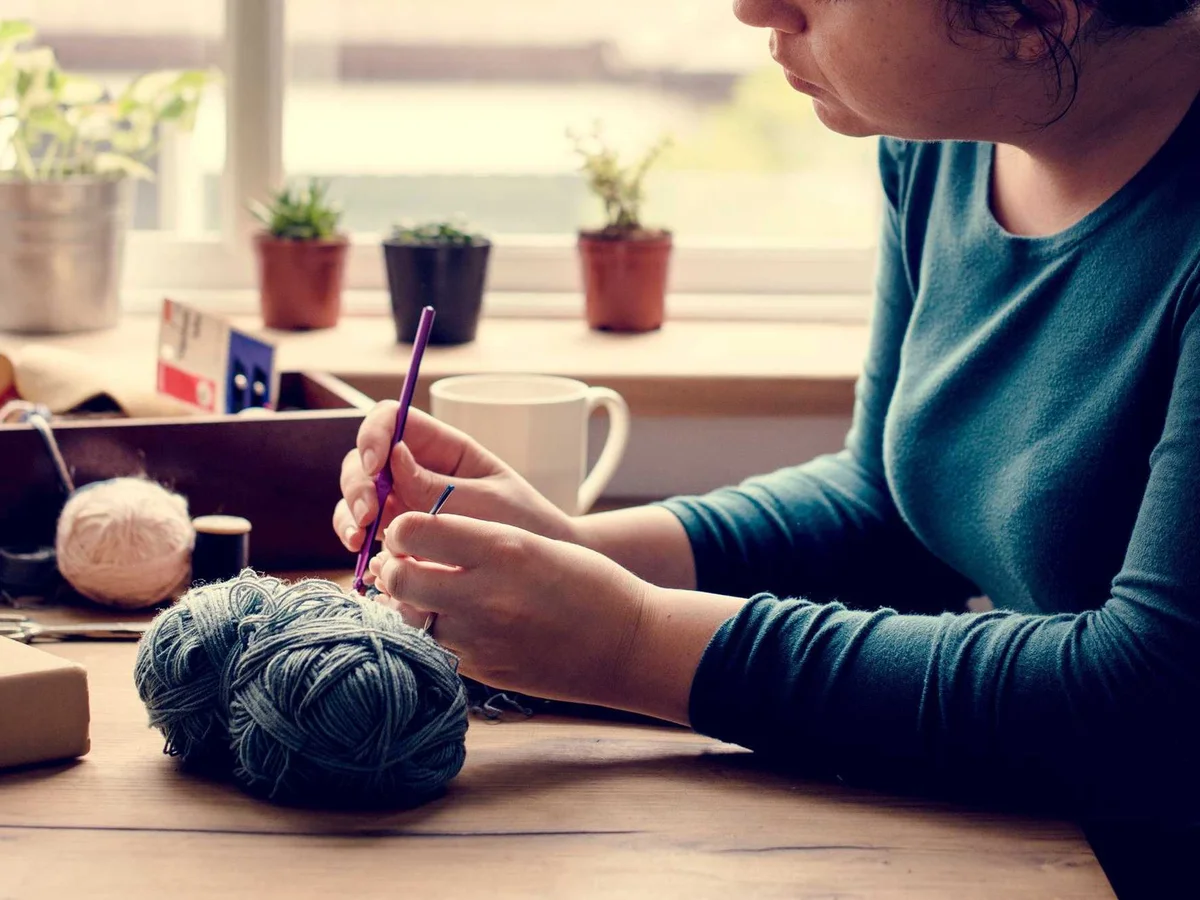
Crochet turns lengths of yarn into something substantial, and the afghan is the classic demonstration of it. It is also the project most people attempt too early and abandon.
A little planning makes the difference.
Choose the construction first
Three common approaches, and they suit different working styles.
One piece. Worked from one edge to the other, or in rounds from the centre. No assembly at the end, which is a real advantage. The drawback is that the rows get very long, and by the end each one takes an evening. It also becomes heavy and awkward to carry.
Strips. Several long panels, joined at the end. Portable, and each strip finishes satisfyingly. There is some seaming, but far less than motifs.
Motifs. Squares, hexagons or triangles made individually and joined. The most portable of all and the easiest to pick up in short sessions. The cost is assembly, which is where most motif blankets stall.
If you are likely to lose momentum, choose strips or motifs and use join-as-you-go so the piece grows as you work.


Buy all the yarn at once
This is the single most common regret. Yarn is dyed in batches, and two balls of the same colour from different lots will differ enough to show as a band across a finished blanket.
Work out your quantity, add a ball, and buy it all in one go with matching dye lot numbers.
Estimating quantity
Make one square, or a strip’s worth of rows, and note how much yarn it used. Multiply up. This is far more reliable than a general rule, because tension varies enormously between crocheters.
For a one-piece blanket, remember that consumption rises as the rows get longer.
Keeping it even
On a large piece, small errors compound.
Count your stitches at the end of every row for the first several rows, until the rhythm is established. A row that has gained one stitch will keep gaining, and a blanket that starts rectangular can finish as a trapezoid.
If you are working motifs, compare the first and last against each other before joining. Tension drifts over a long project, and blocking will even out a small difference but not a large one.
Weave in ends as you go
A colourwork or motif blanket generates a very large number of ends. Leaving them all to the finish is how projects get abandoned within sight of completion.
Yarn choice
Machine washable, unless the blanket is purely decorative. A blanket is used, and one that cannot be washed will end up in a cupboard.
Acrylic and superwash wool are both sensible. Choose something soft – an afghan is against skin for hours at a time.
