


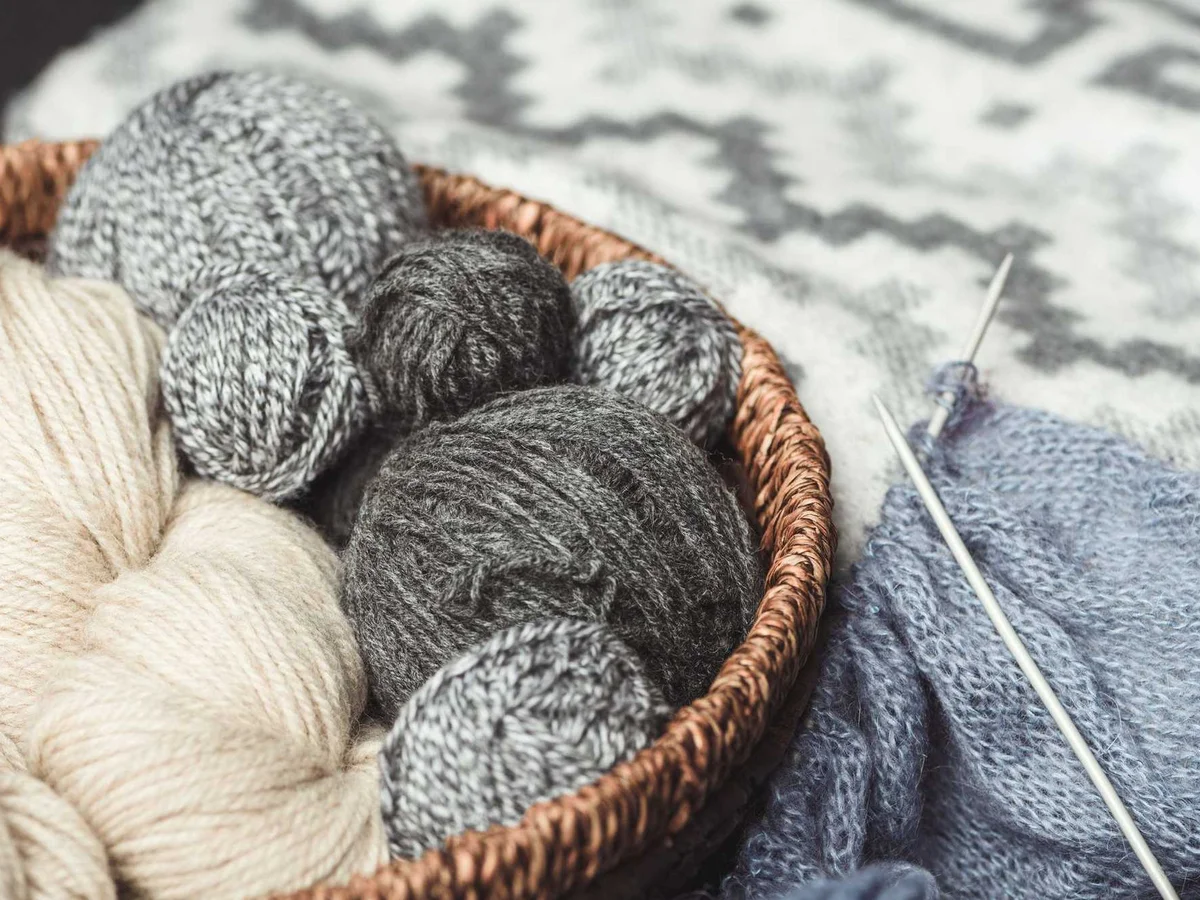
Knitting with a yarn dyed to your own exact colour is a genuinely creative experience. Better still, dyeing it with natural materials you have gathered yourself means the finished piece is entirely your own.
What natural dyeing gives you
Colours you cannot buy. Natural dyes produce complex, slightly variable shades that synthetic dyes – which are consistent by design – do not.
They also age differently, softening rather than simply fading.
The trade-off is predictability. The same plant gathered in a different month, or grown in different soil, gives a different result. For some people that is the appeal; for others it is a reason to use synthetics.
Which fibres
Wool, alpaca and silk take natural dye well. Cotton and linen are harder and need different preparation. Acrylic will not dye at all.
Buy undyed yarn sold for the purpose, in hanks. Yarn in a ball dyes only on the outside.


Mordanting comes first
The step that separates natural dyeing from throwing yarn in a pot of onion skins.
A mordant is a substance that fixes the dye to the fibre – most commonly alum, which is safe and widely available. Without one, most natural colours wash straight out.
Simmer the yarn gently in a mordant solution, let it cool, and then dye. Some people mordant a batch of yarn in advance and store it.
What to gather
Onion skins – the easiest and most reliable. Yellow to deep orange-brown, and free.
Avocado stones and skins – soft pinks, which surprises people.
Black beans – blues and greys, from a cold soak rather than heat.
Nettles, birch leaves, bracken – greens and yellows.
Madder root for reds, weld for yellow, woad or indigo for blue. These are the traditional dye plants and can be grown.
Gather responsibly, take a little from many plants, and never anything protected.
The process
Simmer the dye material to extract the colour, strain it, then add the wet mordanted yarn and hold it just below simmering until the shade is right.
Do not boil, and do not shock it with a sudden temperature change. Both felt wool.
Colour looks darker wet than it will dry. Take a small snippet out and dry it to judge.
Safety
Dedicated pots and utensils, never returned to food use. Gloves. A dust mask for powdered mordants. Ventilation.
Some plants are toxic – check anything you are not certain of before simmering it in your kitchen.

