


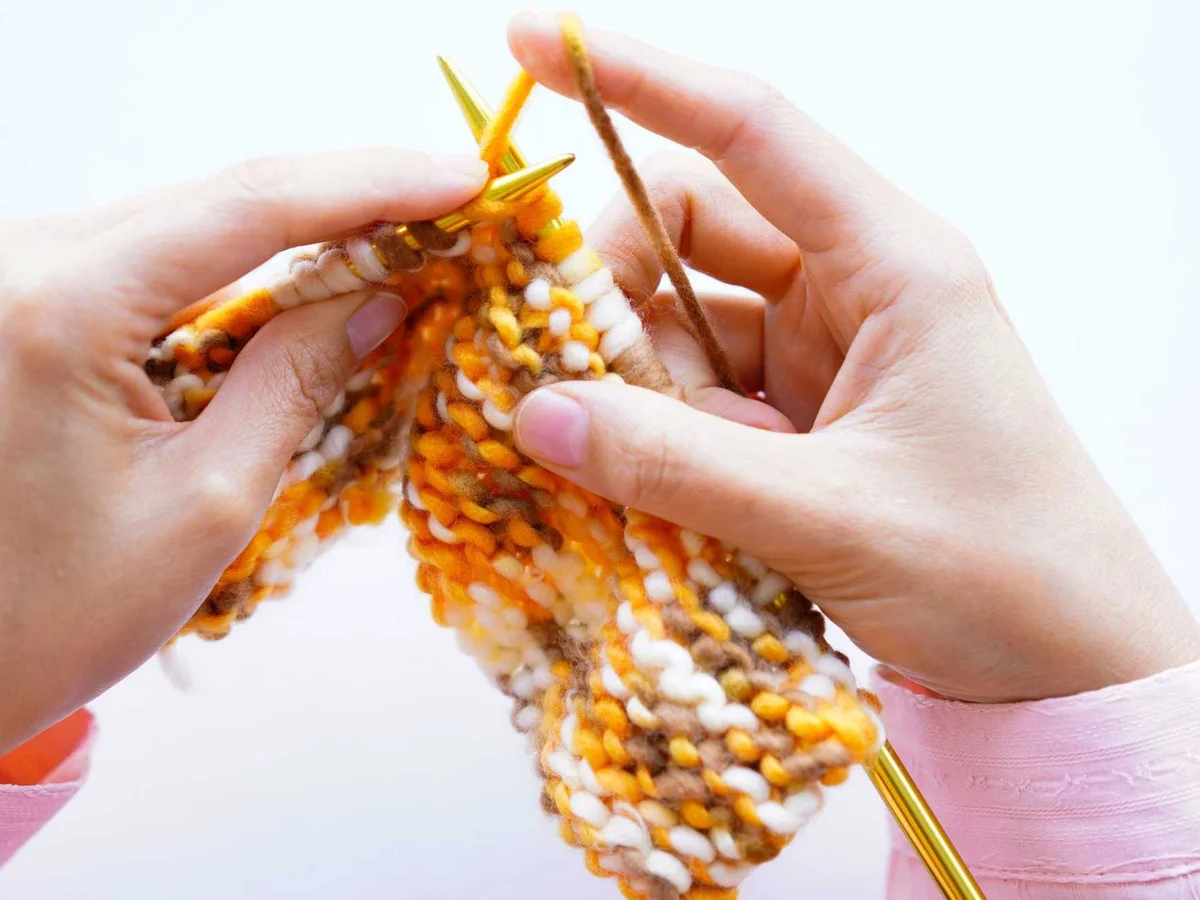
Parents are busy, and more stressed than ever. Having something that is genuinely your own may be exactly what helps.
1. It relieves stress
Time spent on a hobby replaces negative thoughts with positive ones. A creative outlet lifts the spirits and helps with low mood in a way that is well recognised.
Unlike passive activities – television in particular – a hobby gives intellectual stimulation. You are doing something rather than being shown something, and that difference is what makes it restorative rather than merely distracting.
Crafts are particularly good at this. The repetition occupies part of the attention and frees the rest, which is why so many people describe knitting or crochet as calming rather than demanding.
2. It gives you something that is yours
When you spend most of the day responding to other people’s needs, having one thing that belongs entirely to you matters more than it sounds.
A hobby is not for anyone else. Nobody is being fed, driven, or looked after by it. That is precisely its value – it is a space where you are not in service to a schedule.


It also gives you an identity outside the role, which many parents find quietly slips away.
3. It sets an example
Children notice what adults do far more than what they are told.
A parent absorbed in making something is showing a child that adults have interests, that skills are worth acquiring, and that boredom is solvable. That lesson lands more effectively than any amount of encouragement to find a hobby of their own.
And there is a decent chance they will want to join in, which is time together of a better kind than most.
Making it possible
The obvious objection is time, and it is a real one. Two things help.
Choose something interruptible. This is the practical argument for crochet and knitting over almost anything else. You can put the work down mid-row and pick it up twenty minutes later. A hobby that requires an uninterrupted three hours will not survive a household with children in it.
Keep it small and visible. A project in a bag by the chair gets picked up. One in a box in a cupboard does not.
Fifteen minutes counts. The benefit does not require a long stretch of time – it requires regularity, which is much easier to find.

