


The picture used to be stuck in an outdated idea of crafts for older people: cutting out paper chains and valentines, making doilies, fussing with clay and paints. As though craft in later life were a way of filling time rather than doing something.
That view has largely gone, and rightly.
What craft actually offers
It keeps hands working. Fine motor control and dexterity respond to use, and craft is one of the more enjoyable ways to maintain them. It is frequently recommended after certain injuries for exactly this reason.
It occupies the mind productively. Following a pattern, counting stitches, planning colours – these are real cognitive tasks, and they are more engaging than most of what is offered as an activity.
It produces something. This matters more in later life, not less. Making an object that someone else will use is a form of contribution, and the loss of that is one of the harder parts of ageing.
It is sociable. Craft groups are among the most reliable regular social contact many people have.
Choosing activities properly
The key is to treat it as a craft rather than an occupation.


Ask what they already know. A great many older people have decades of skill in knitting, sewing, woodwork or embroidery. Offering a beginner activity to someone who has been knitting since 1950 is insulting, and it happens constantly.
Let the work be real. Something that will be given, worn, or displayed. Blankets for a charity, hats for a hospital, toys for a children’s ward – purposeful work is valued far more than exercises.
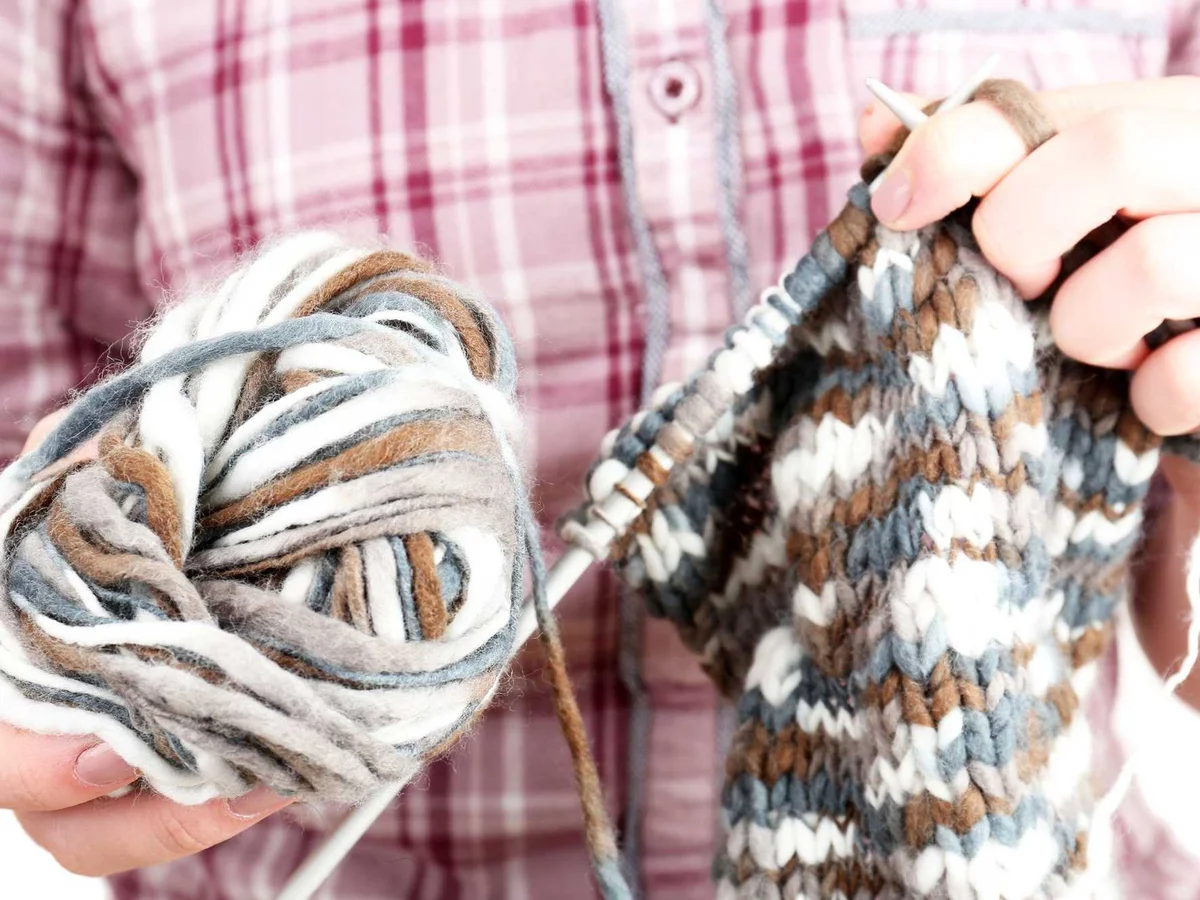
Adapt rather than simplify. If arthritis makes fine work painful, move to thicker yarn and a larger hook rather than to an easier craft. The skill is intact; only the scale needs to change.
Practical adaptations
Good light matters more than anything else, and is the most commonly overlooked.
Thicker yarn and larger hooks or needles reduce strain considerably and work up faster, which helps with fatigue.
Wooden and bamboo tools are warmer and easier to grip than metal. Padded handles help with arthritic hands.
Shorter sessions with breaks, rather than long stretches.
High-contrast materials – light yarn on a dark surface, or the reverse – make the work far easier to see.
The point
The question is not what activity is suitable for an older person. It is what this particular person would like to make.

