


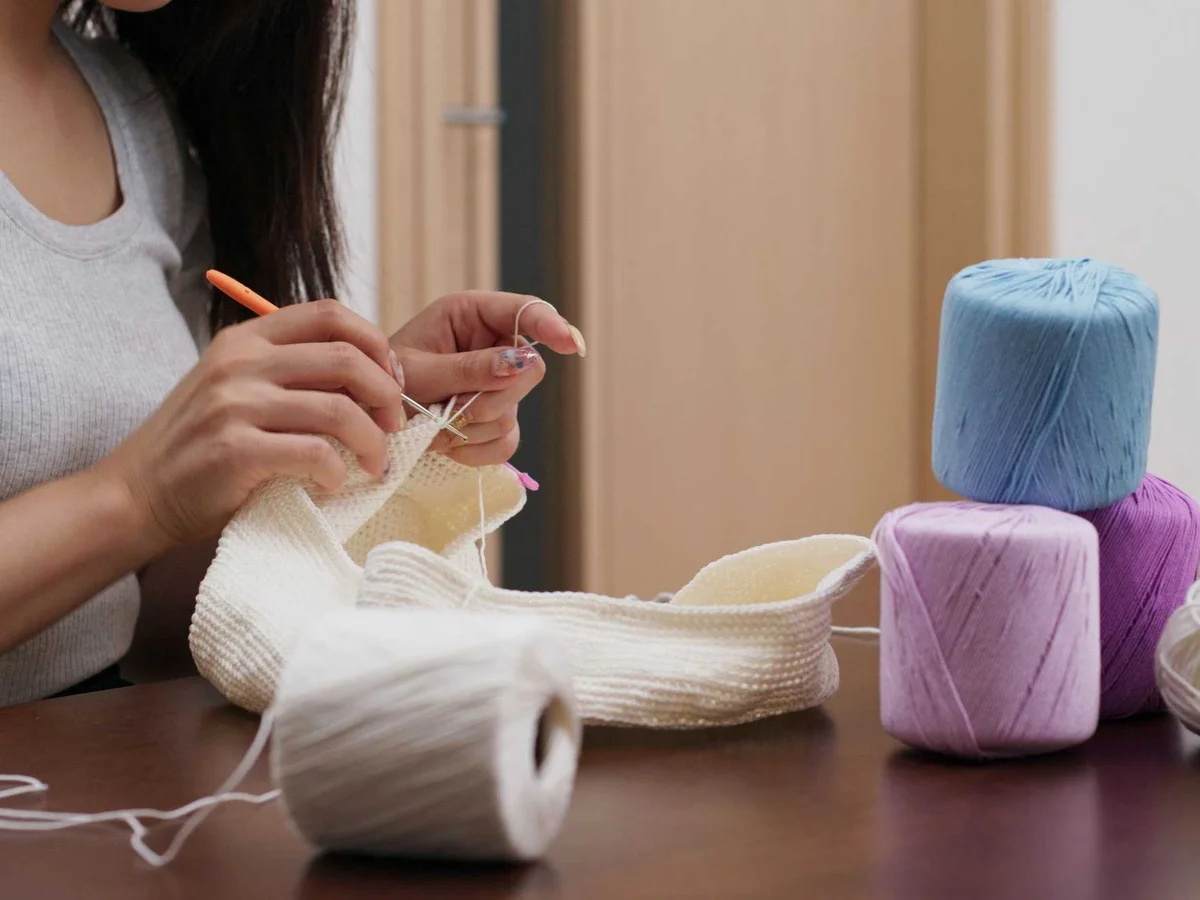
Once you have the crochet basics you can make anything from a pot holder to a wedding gown. The basic stitches start with the chain, the single crochet and the double crochet.
That really is where it begins, and the list of what those three unlock is longer than most people expect.
The chain
The foundation of almost everything. A slip knot, then loop pulled through loop, repeated.
It is also the first thing to get right: chains worked too tightly make the first row miserable to work into. Keep them loose and even – most beginners chain too tight.
Single crochet
A short, dense stitch. Insert the hook, draw up a loop, yarn over, pull through both.
It makes a firm fabric that holds its shape well, which is why it is used for amigurumi, bags and anything structural. Worked flat it is slow but very solid.


Double crochet
Taller and faster. Yarn over first, insert the hook, draw up a loop, then work off two loops at a time.
Most blanket and garment patterns are built from it, because it covers ground quickly and produces a fabric with reasonable drape.
What those three make
Dishcloths, scarves, blankets, granny squares, hats, bags, cushion covers, toys.
Everything else in crochet is a variation on where you put the hook and how many times you wrap the yarn. Half double crochet sits between single and double. Treble is taller again. Post stitches go around the stem rather than into the top. Working into the back loop only gives ribbing.
None of those is a new skill so much as a small change to something you already do.
Where to start
A dishcloth in cotton. Flat, small, forgiving, and finished in an evening.
Then a scarf, then a granny square, then a blanket made from many squares.
The materials
A 5.00mm hook and smooth, light-coloured worsted weight yarn. Light and smooth so you can see the stitches – this matters more than any other choice.
A blunt tapestry needle for weaving in ends.
Two traps
The turning chain, which causes most wonky edges. Read what your pattern says about whether it counts as a stitch, and be consistent.
And US versus UK terminology – the same words mean different stitches. Check which your pattern uses before assuming you have gone wrong.

