


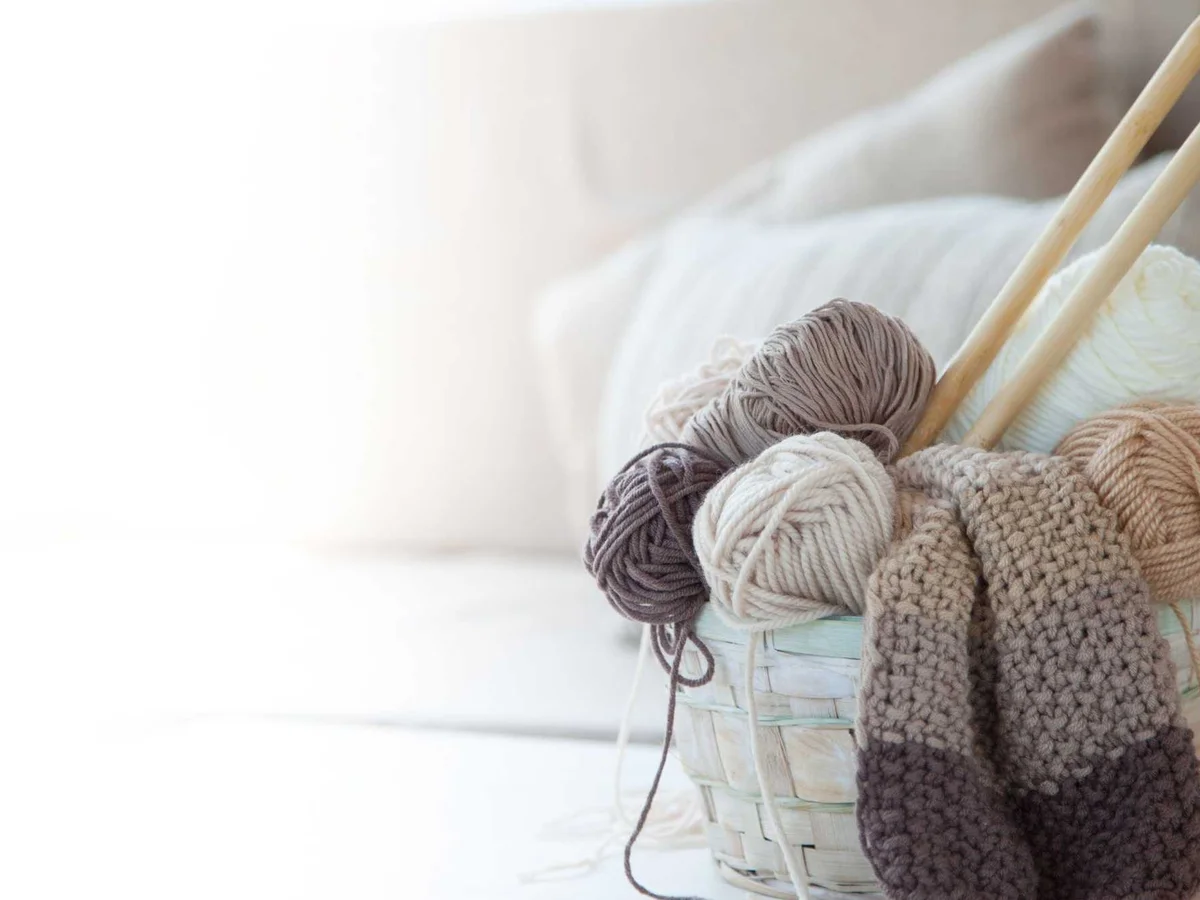
Knitting can feel tiresome if you start in the wrong place. Working a large cardigan as a first project is tedious and eats a great deal of time, and plenty of people conclude from that experience that the craft is not for them.
It need not be expensive either.
Keeping the cost down
Recycle yarn from old sweaters and cardigans. Unravelling a knitted garment gives you good yarn for nothing, and charity shops are full of wool sweaters that cost less than a single ball of new yarn.
The yarn will come off crinkled. Wind it into a loose hank, tie it in a few places, soak it in lukewarm water and hang it to dry – the kinks fall out and it is ready to use again.
Buy secondhand needles. They do not wear out. A set bought used works exactly as well as a new one.
Learn to spin, if you have the time and inclination. It is a craft in its own right and it changes your relationship to yarn entirely.
Two ways of holding the yarn
Knitters use different methods, and it is worth knowing that the choice exists.


English method: the working yarn is held in the right hand and thrown around the needle. It is the more common method in Britain and America, and many people find it easier to learn because the movements are large and distinct.
Continental method: the yarn is held in the left hand and picked with the needle. Fewer movements, so it is generally faster once learned, and it is more familiar if you crochet – the left hand does much the same job.
Neither is better. Learn whichever is being demonstrated to you, and know the other exists if the first never feels comfortable.
Start small
The single most useful piece of advice. A dishcloth or a simple scarf finishes quickly and teaches everything a large project would, without the months.
A first project that is finished is worth far more than an ambitious one that is abandoned, and the difference between the two is almost always size.
What to learn, in order
Casting on, the knit stitch, the purl stitch, binding off. Those four make almost everything else.
Garter stitch is all knit. Stocking stitch alternates knit and purl rows. Ribbing mixes them within a row. Once those are comfortable, increases and decreases open up shaping, and after that nothing is really new – only combined differently.
Expect it to be awkward at first
Everyone’s early tension is uneven and their hands feel clumsy. It settles within a few projects, and no amount of unpicking speeds it up. Keep going and finish the thing.

