


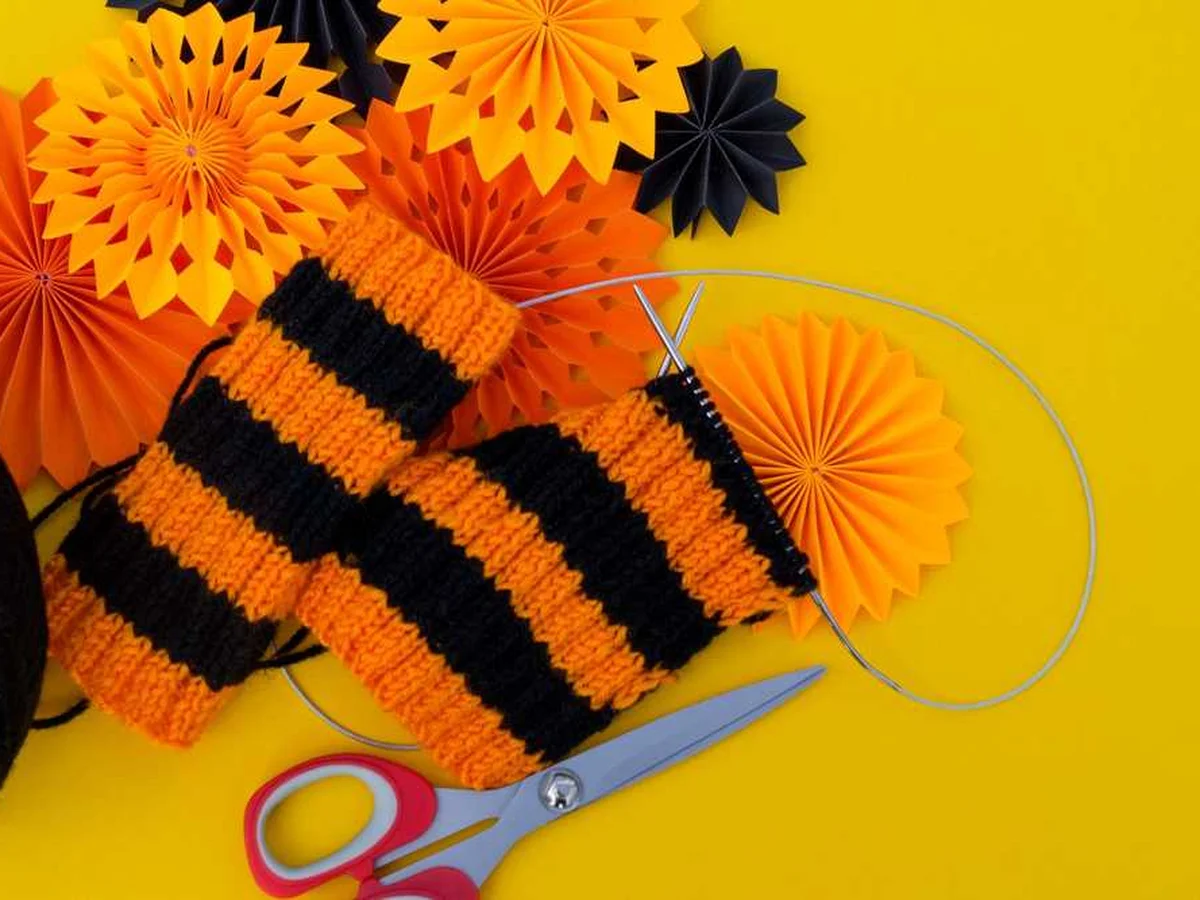
When you buy a knitting machine, the yarn you knit with is just as important as the machine.
The composition of the yarn – natural or synthetic – the degree of twist, and the resulting knitted texture are all crucial to how the finished garment turns out.
The trepidation is normal
Very few knitting machines are bought without some apprehension. There is always the feeling that learning to use one will prove too difficult.
It is worth saying plainly that machines are not harder than hand knitting, only different. The difficulty people run into is usually not the machine at all – it is the yarn.
Why twist matters
Twist is how tightly the fibres are spun together, and it is the property that most affects whether a yarn will run through a machine.
Too little twist and the yarn is weak and fluffy. It breaks under the tension the machine applies, and loose fibres shed and clog the mechanism.


Too much twist and the yarn is lively – it kinks and curls on itself, and it will twist as it feeds, causing dropped stitches and uneven fabric.
What you want is a firm, even, moderately twisted yarn. Coned yarn sold for machine knitting is spun with exactly this in mind, which is why it works so much better than yarn from a ball.
Composition
Wool and wool blends knit well by machine and block beautifully. Pure acrylic is inexpensive and consistent but can feel flat.
Cotton is harder work: it has no stretch, which means more tension on the needles and a greater chance of dropped stitches. It is possible, but it is not a good yarn to learn on.
Avoid anything textured, slubby or with a strong halo. Novelty yarns and knitting machines are a poor combination.
The oil question
Yarn sold on cones for machine knitting is often supplied with a light spinning oil still in it, which helps it run smoothly. The oil washes out afterwards, and the fabric softens and blooms considerably when it does.
This surprises people the first time – a swatch that feels stiff and thin off the machine becomes a different fabric after washing. Always wash your swatch before judging either the fabric or the gauge.
Practical advice
Swatch and wash the swatch. Machine gauge is unforgiving and pre-wash measurements will mislead you.
Use a yarn brake or tension mast properly – most feed problems are tension problems rather than yarn problems.
Keep the needle bed clean. Fibre and oil accumulate and cause dropped stitches long before anything actually breaks.
Start with a cone of standard machine yarn in a mid weight. Learn the machine on yarn that is designed for it, and experiment afterwards.

