


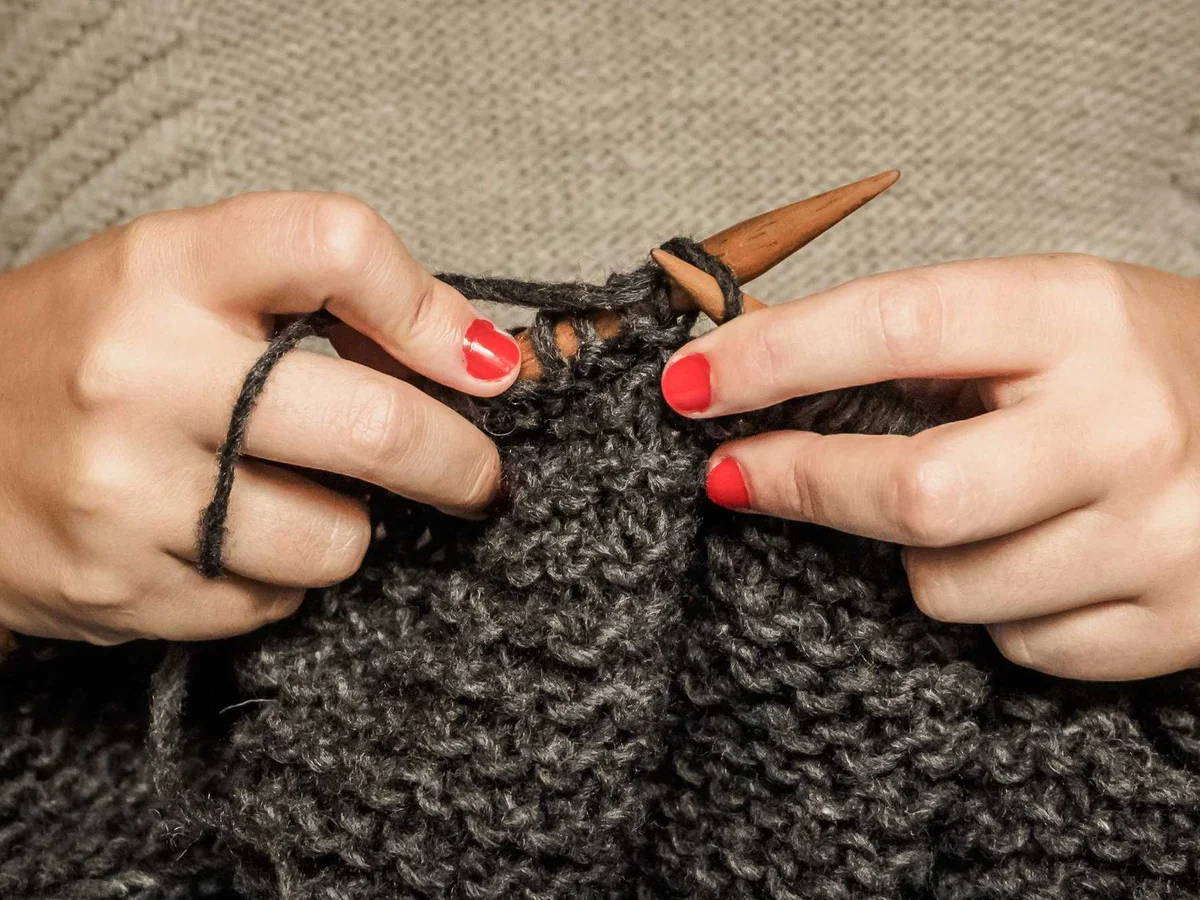
If you love the idea of knitting sweaters, leg warmers, cuffed slippers and socks for yourself and your family, there is no reason to wait. There are so many patterns to choose from that the difficulty is picking one rather than finding one.
Choose a pattern you can finish
The most useful decision you will make.
Most patterns state a skill level, and it is worth taking seriously – not as a limit, but as a description of how much will be explained and how much assumed.
A beginner pattern spells out every step. An advanced one will say “shape the shoulder as established” and expect you to know what that means.
Start flat, where fit does not matter. Then hats and slippers, which introduce shaping at a small scale. Then garments.
Materials matter more than skill at first
Smooth, light-coloured, medium weight yarn on bamboo needles around 5mm.


This is not aesthetics. Dark or fuzzy yarn hides the stitches, and being unable to see your own work is the commonest reason beginners stop. Bamboo grips slightly so fewer stitches slide off.
Learn to read your knitting
The skill that changes everything, and it comes from looking rather than from instruction.
A knit stitch looks like a V; a purl looks like a bump. Once you can see that, you can tell where you are in a pattern without counting, spot an error several rows back, and pick up after an interruption without notes.
Spend some time looking at your fabric rather than only at the instructions.
Count your stitches
At the end of every row for the first ten rows of anything.
Adding stitches accidentally at the edges is the standard beginner problem, and it turns a scarf into a triangle. Caught in the same row it costs seconds.
Toward designing your own
Once a few projects are behind you, designing is less mysterious than it sounds.
Start by modifying rather than inventing: change the length, the yarn, the stitch pattern of something you have already made. That teaches you what each change does without risking a whole garment.
Work out your gauge and keep notes. Every measurement in a design is derived from stitches per inch, and a design you cannot reproduce is not a pattern.
Expect the first attempts to be poor
Uneven tension and untidy edges are what learning looks like. They settle within a couple of projects.
The difference between people who knit and people who once tried is almost never aptitude. It is whether they finished the first uneven thing and started a second.
