


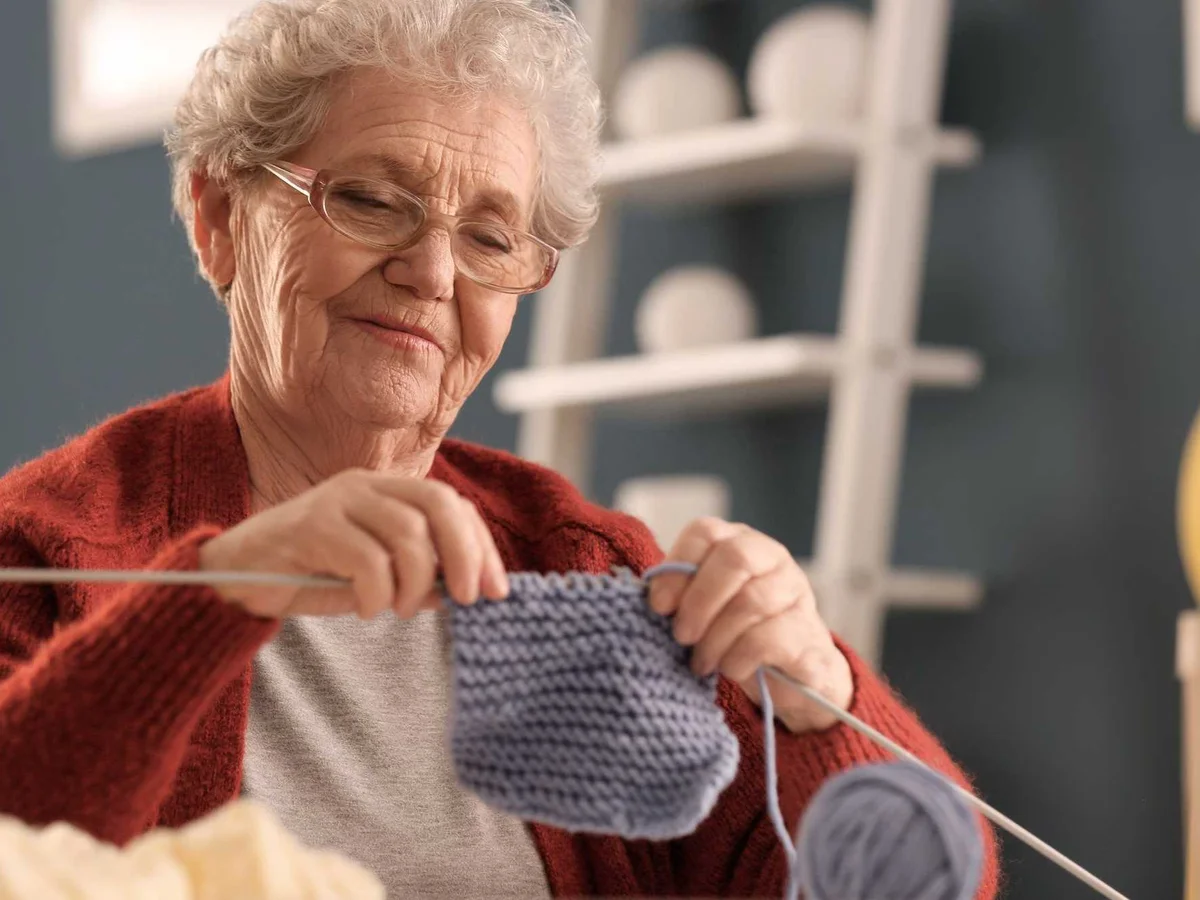
If you enjoy any kind of needlework, your children will most likely be eager to pick it up too – crochet, knitting, sewing, embroidery, cross stitch, any of it. They want to do what you are doing.
It takes time out of your schedule, but there are real benefits to teaching them and letting them join you.
What they get from it
Patience. Needlework cannot be rushed. A project takes as long as it takes, and learning that is genuinely useful.
Fine motor skills and coordination. Directly and measurably.
Focus. Following a pattern and keeping a count is sustained concentration, and it is voluntary rather than imposed, which makes it different from schoolwork.
Problem solving. When something goes wrong they have to work out what and undo it. That is a real skill, practised in a low-stakes setting.
Something to be proud of. A finished object they made is evidence of their own competence, and children carry that.


A skill for life. Many people who learned as children come back to it decades later, and the hands remember.
Teaching it well
Start with a big hook or needles and thick yarn. Chunky yarn on large tools is far easier for small hands, and progress is visible fast, which matters enormously to a child.
Use light, smooth yarn. Being able to see the stitches is the single biggest factor in whether a child gets it.
Keep the first project tiny. A few rows, not a scarf. Something finished in one sitting.
Sit beside them, not opposite. Watching hands from the same angle is far easier to copy than a mirror image. This trips up a lot of well-meaning teaching.
Do not fix their work. The temptation is enormous. Resist it – their uneven square is theirs, and taking it over teaches them that their work is not good enough.
Expect it to be slow
A child may take an afternoon to learn what you could show them in ten minutes. That is not a failure of teaching; it is what learning a physical skill looks like at any age.
Stop before frustration sets in, and come back to it. Short sessions work far better than long ones.
What age
Around five or six for finger knitting and simple weaving. Seven or eight for a crochet chain or basic knitting. It varies enormously between children, and readiness matters more than age.
Let them ask rather than pushing. A child who wants to learn will learn quickly; one who has been signed up will not.
And do it together
The real value is often the time rather than the skill. Sitting and making things alongside each other is a particular kind of company, and children remember it.

