


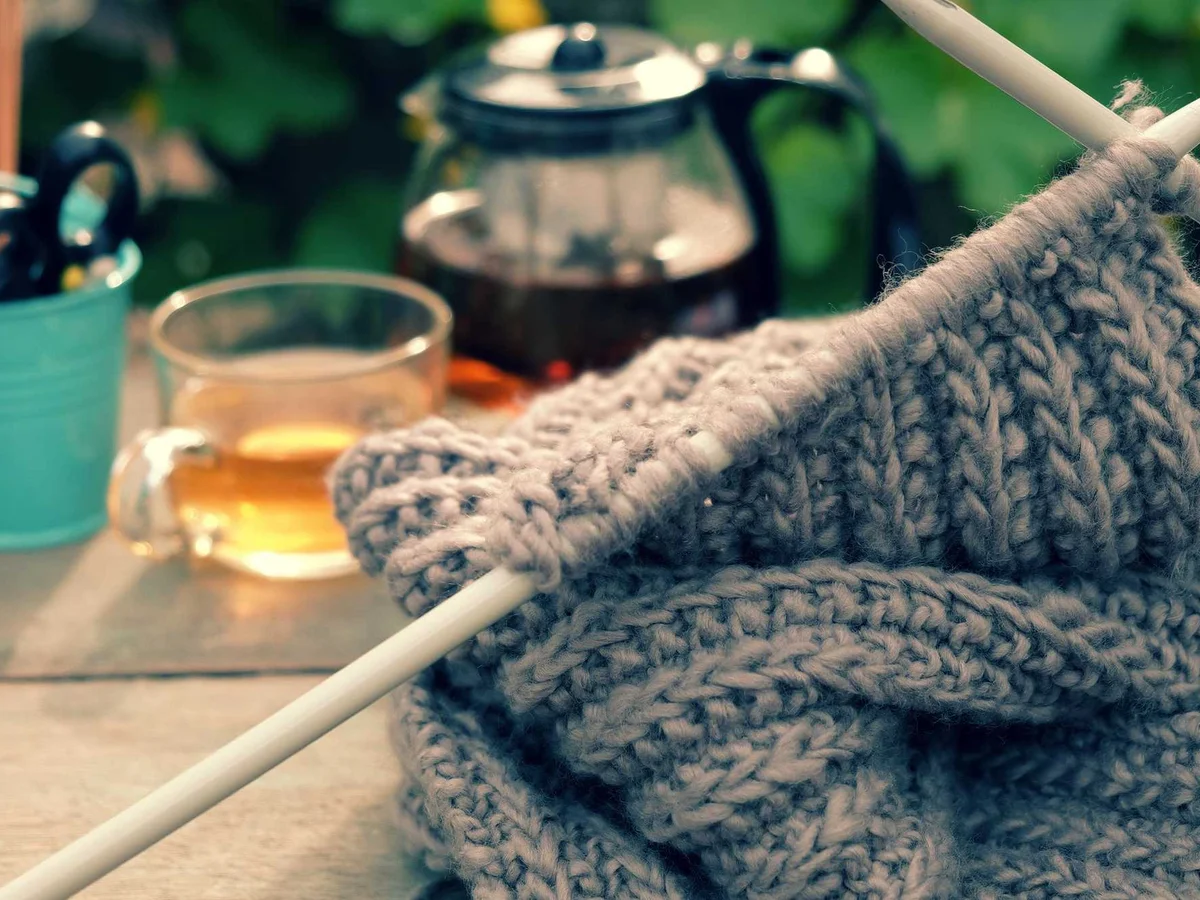
The crochet knit stitch is a genuinely convincing imitation. Worked correctly it produces columns of Vs that look very much like knitted stockinette, and most people will not identify it as crochet without looking closely at the reverse.
What it actually is
There is no new stitch to learn. It is single crochet, worked into a different part of the stitch below. Instead of inserting your hook under both loops at the top of the stitch, you insert it into the vertical strand – the centre of the V – of the stitch in the previous row. That shifts where the fabric folds and produces the knit-like column.
Because it is single crochet underneath, the fabric is denser and less elastic than real knitting. That is the trade-off, and it decides which projects suit it.
Where it works
It is excellent for hats, cowls, mittens, slippers and amigurumi – anything that benefits from a firm, structured fabric with a clean surface. Worked in the round it is particularly good, because the stitch looks best when every row faces the same direction.
It is a poor choice for garments that need to drape or stretch. A sweater in crochet knit stitch will be heavy and stiff compared with the knitted equivalent, and no amount of blocking will fix that. For those projects, knitting needles remain the right tool.
Working in the round
Worked in a spiral, the stitch produces an almost invisible transition between rounds, which is why it is so popular for hats. If you join each round instead, stagger the join position or the seam will show as a visible line up the side of the work.
Tension
Go up a hook size from what you would normally use for single crochet. Inserting the hook into the centre of the stitch tightens the fabric considerably, and at your usual hook size the result is often too stiff to be comfortable.


